Designing Hand-Printed Gig Posters
The Studio Process Behind Hand-Printed Concert Posters for Touring Bands
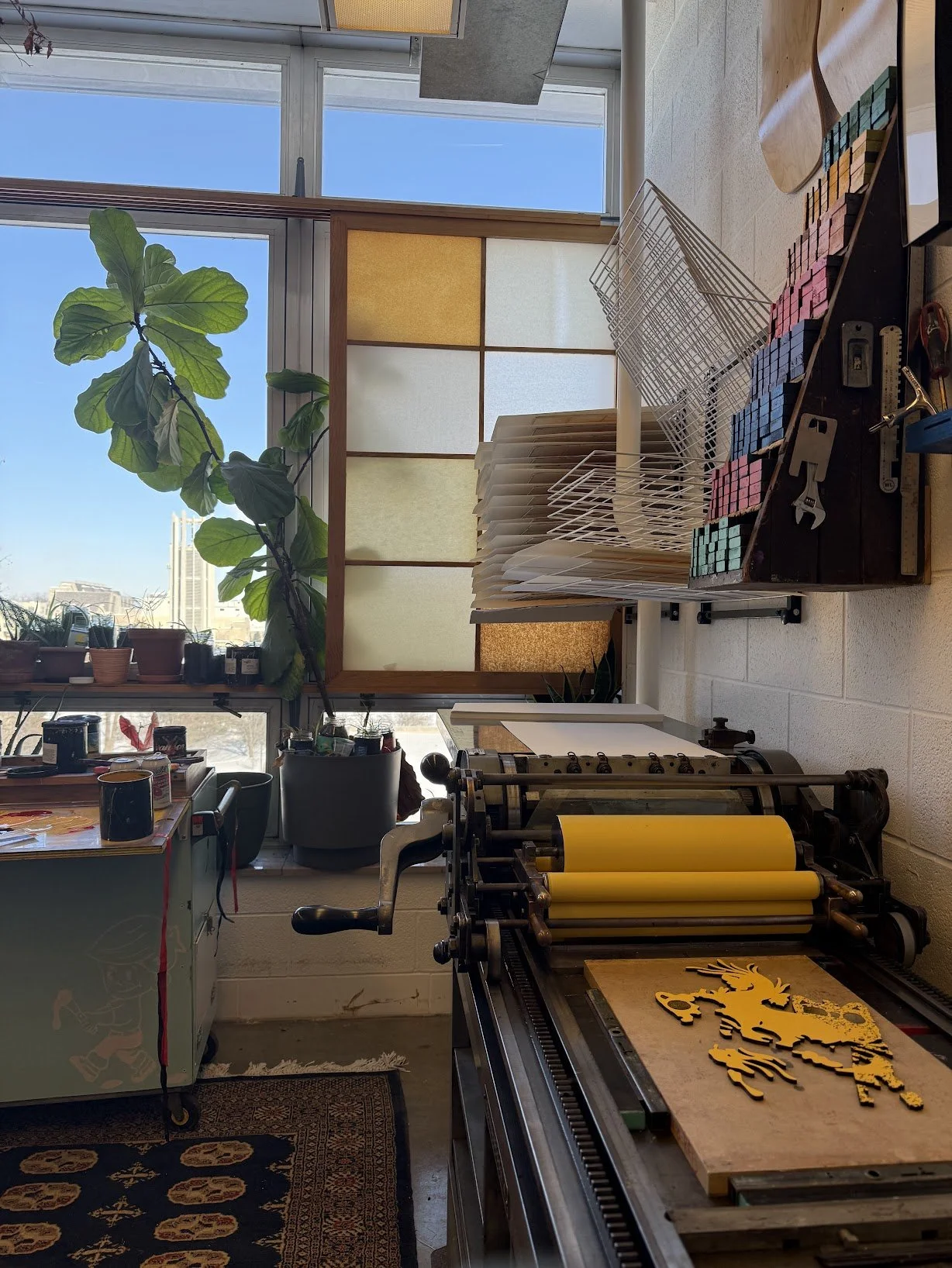
How a Hand-Printed Concert Poster Is Made
Hand-printed concert posters begin with a specific performance. The band, date, venue, and city establish the framework. The goal is not simply to advertise a show, but to create a physical record of that event using traditional relief printing methods.
Concept and Layout
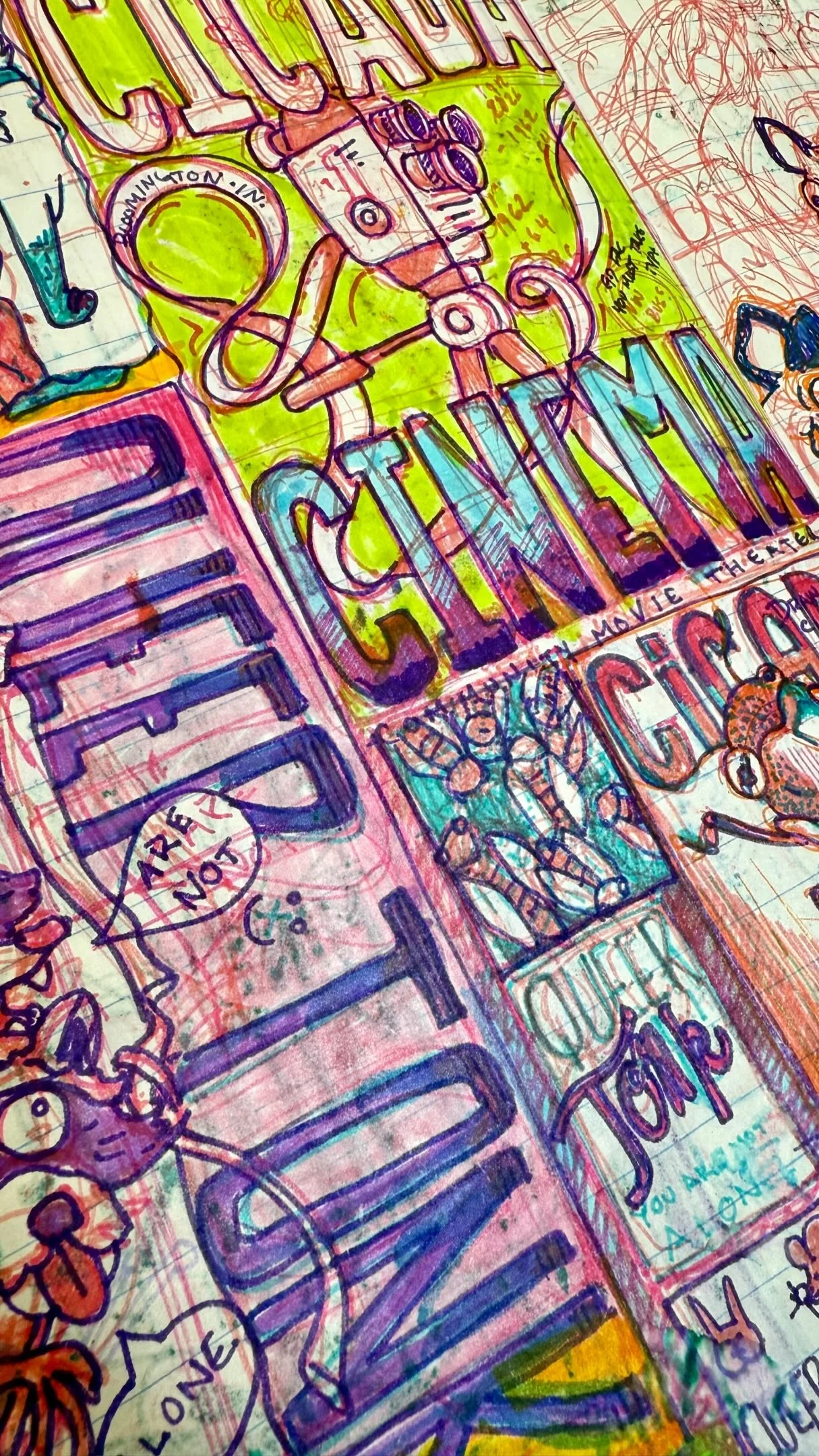
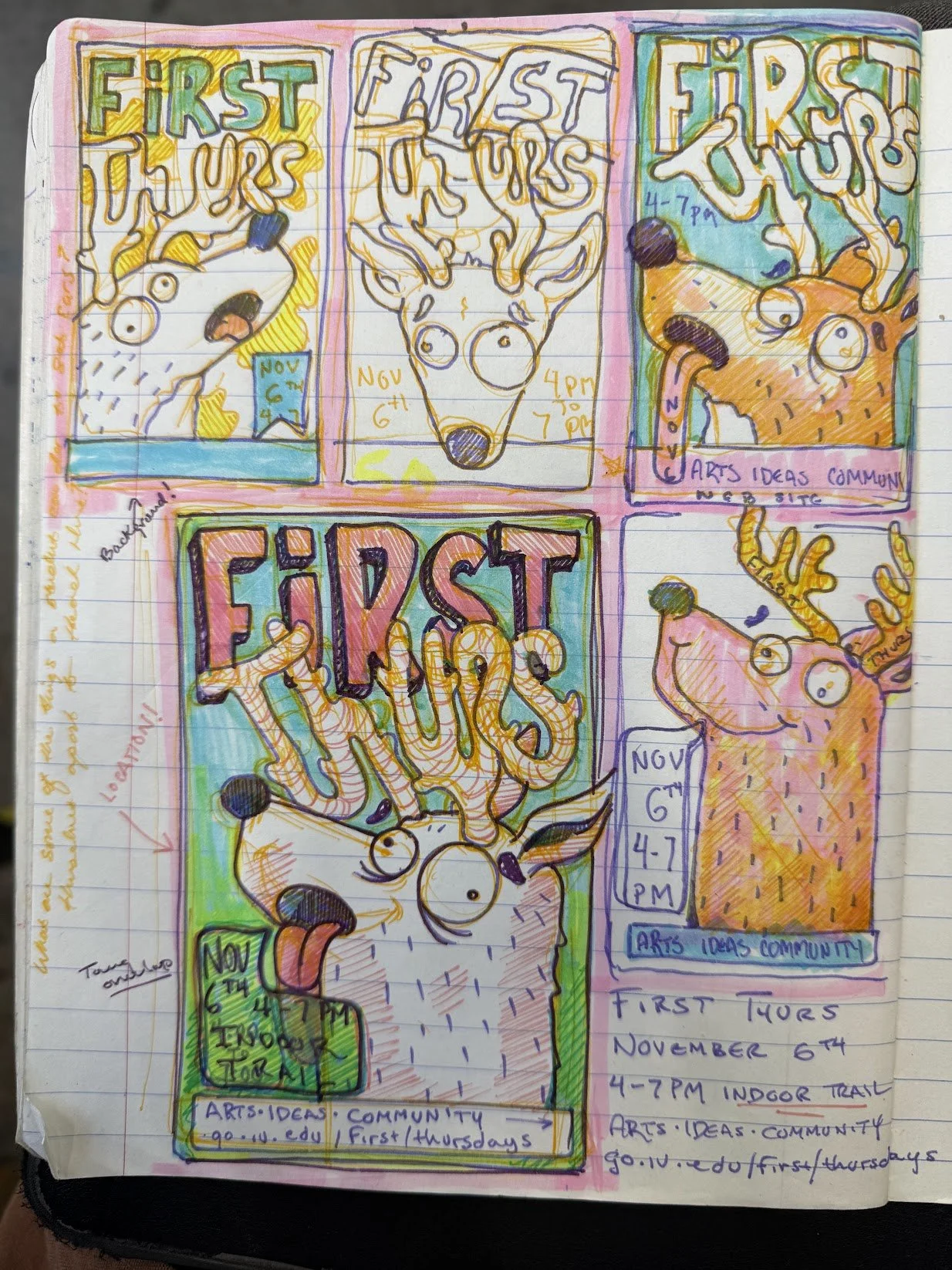
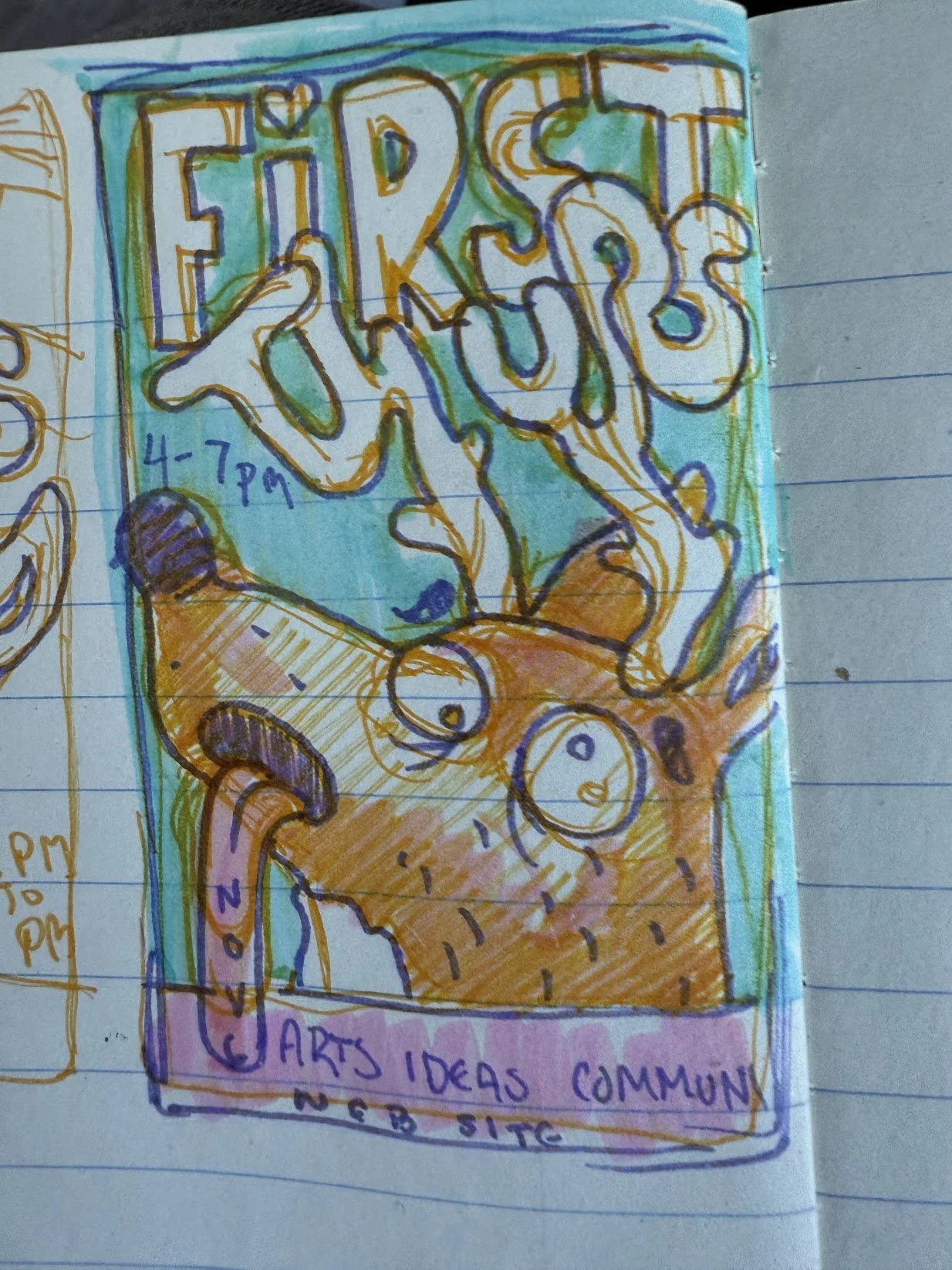
Each project begins with research and sketching. I consider the band’s visual language, the context of the tour, and the character of the venue. Composition develops around type and image simultaneously.
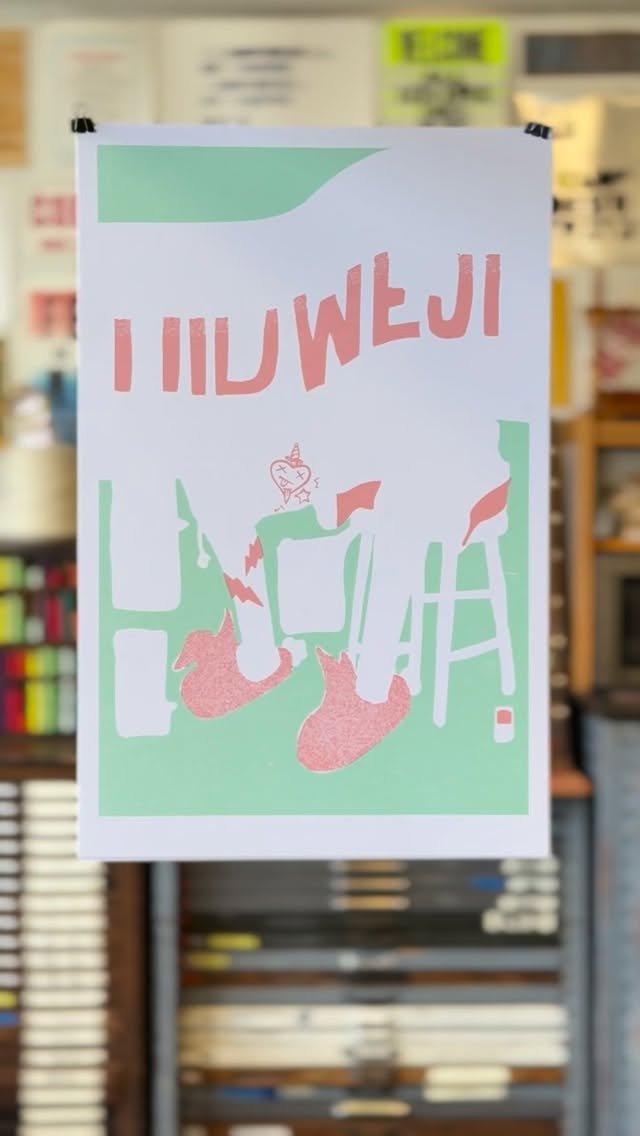
Design decisions are shaped by material realities. Wood and metal type have fixed weight and proportion, while linocuts and laser-cut blocks have a specific material resolution. Because the final piece will be printed by hand, on a proofing press, proportions are dictated by the means of production. Most prints measure 12x18.5 inches.
One day I will own a larger press… Sadly today is not that day.
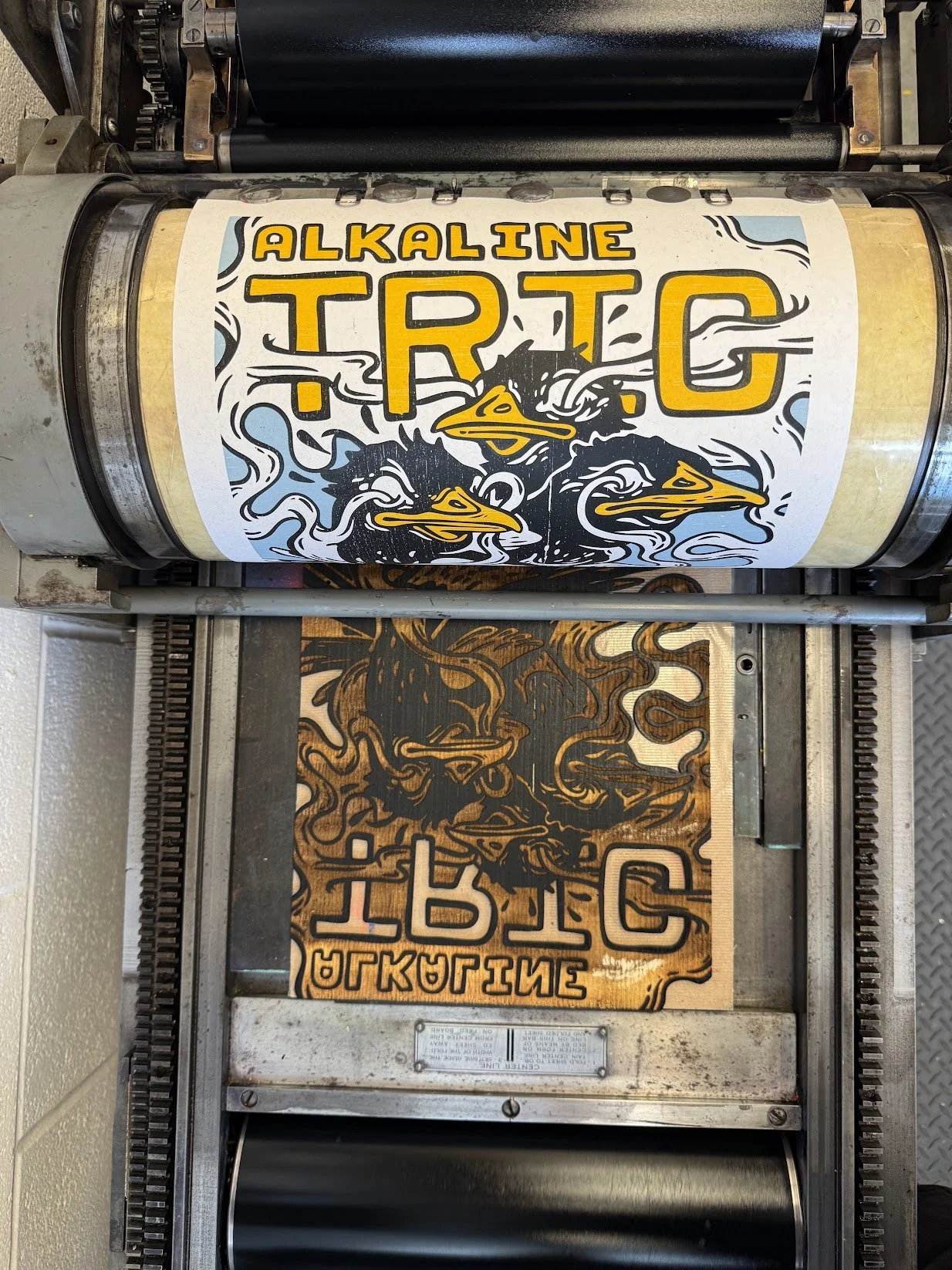
Ink, Paper, and Press Setup
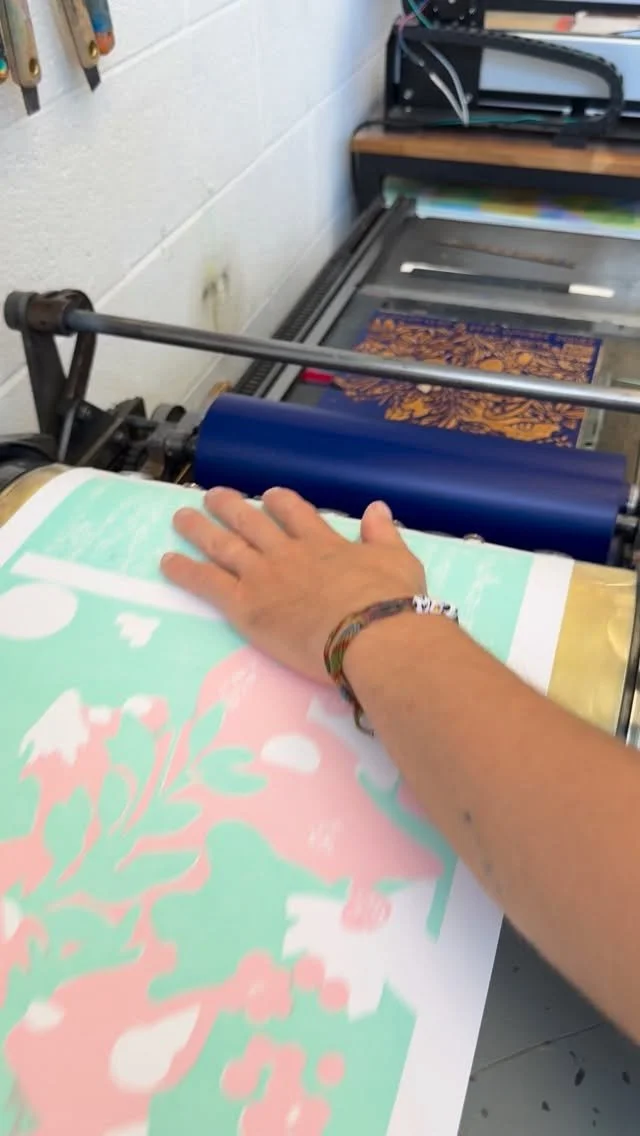
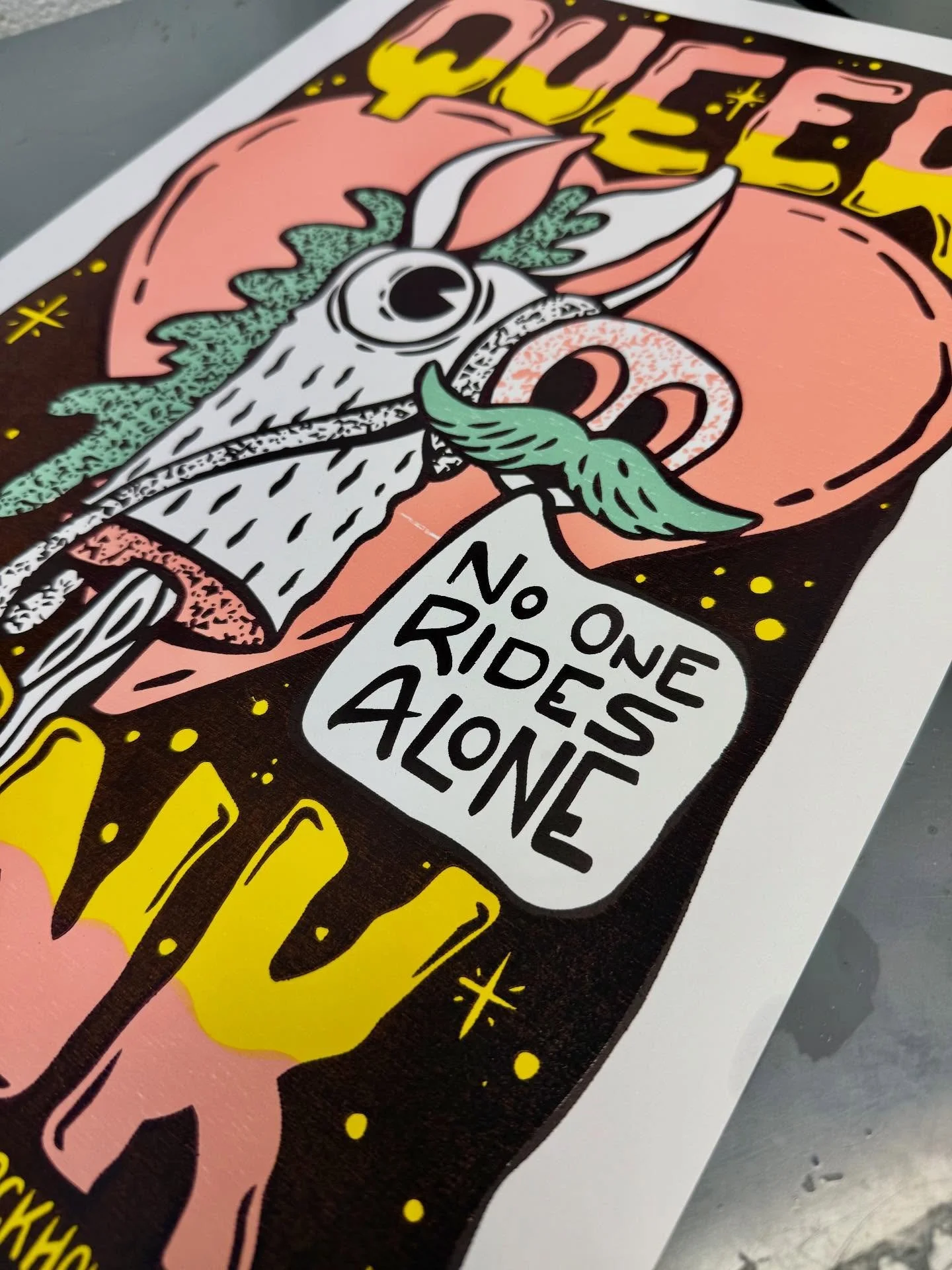
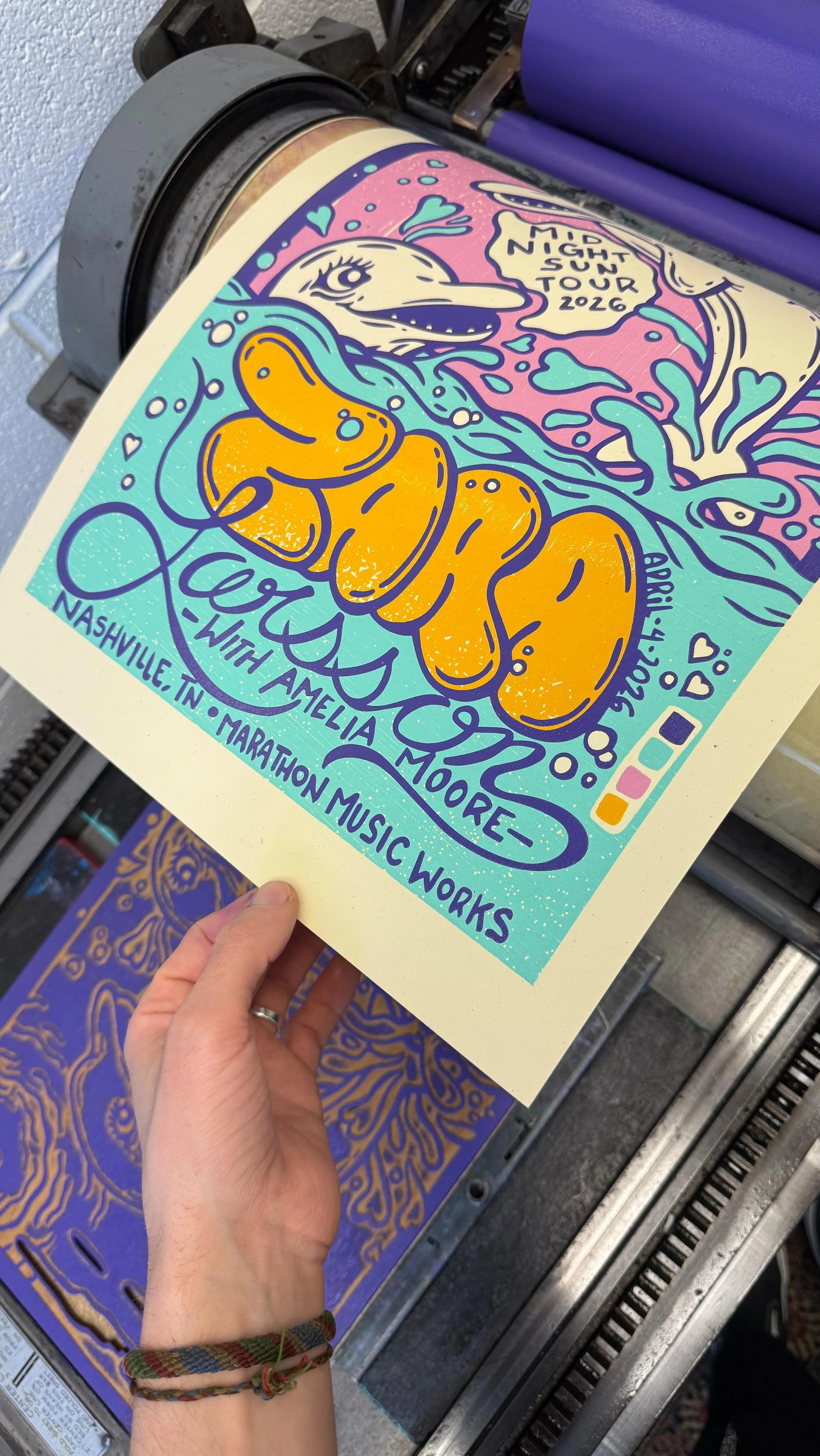
Ink is mixed by hand to achieve the intended color and density. Most posters are printed in multiple passes, with each color requiring a separate run through the press.
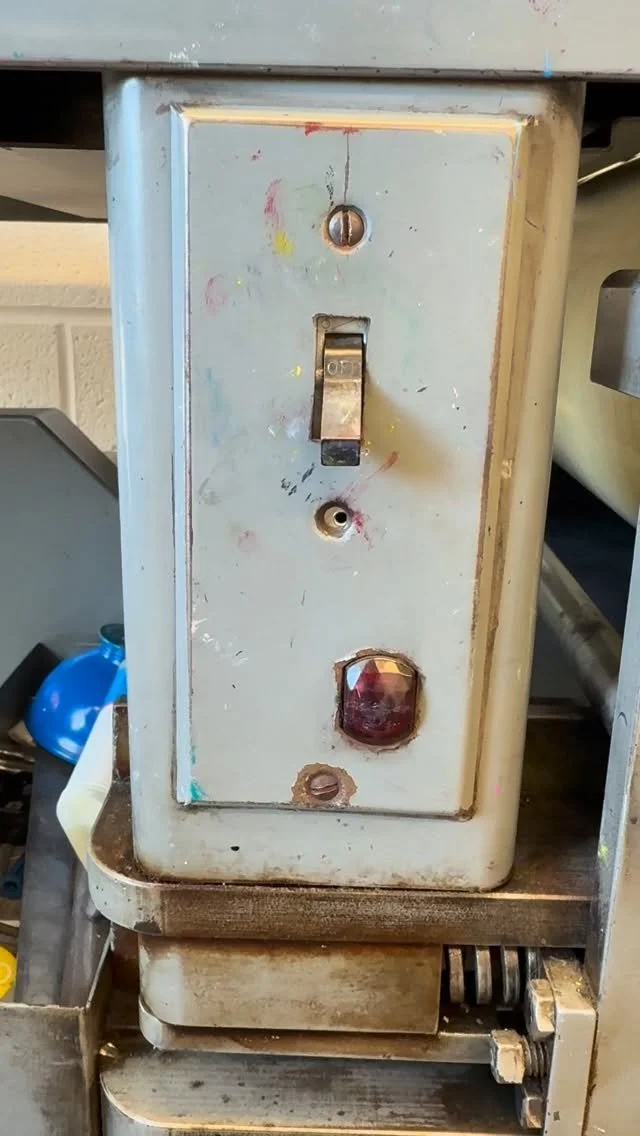
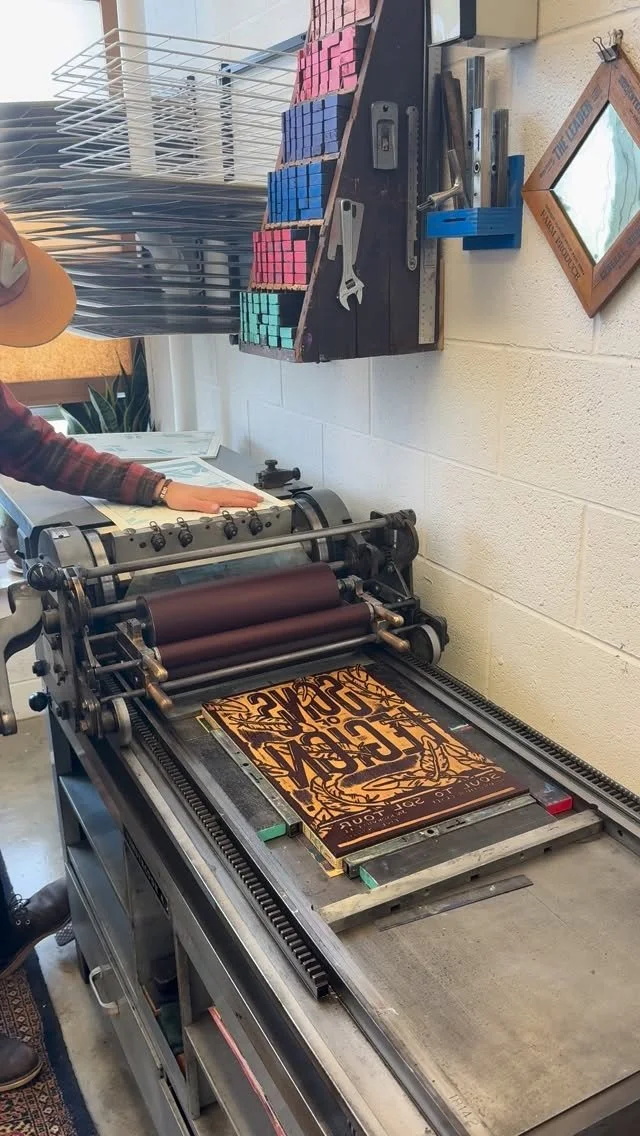
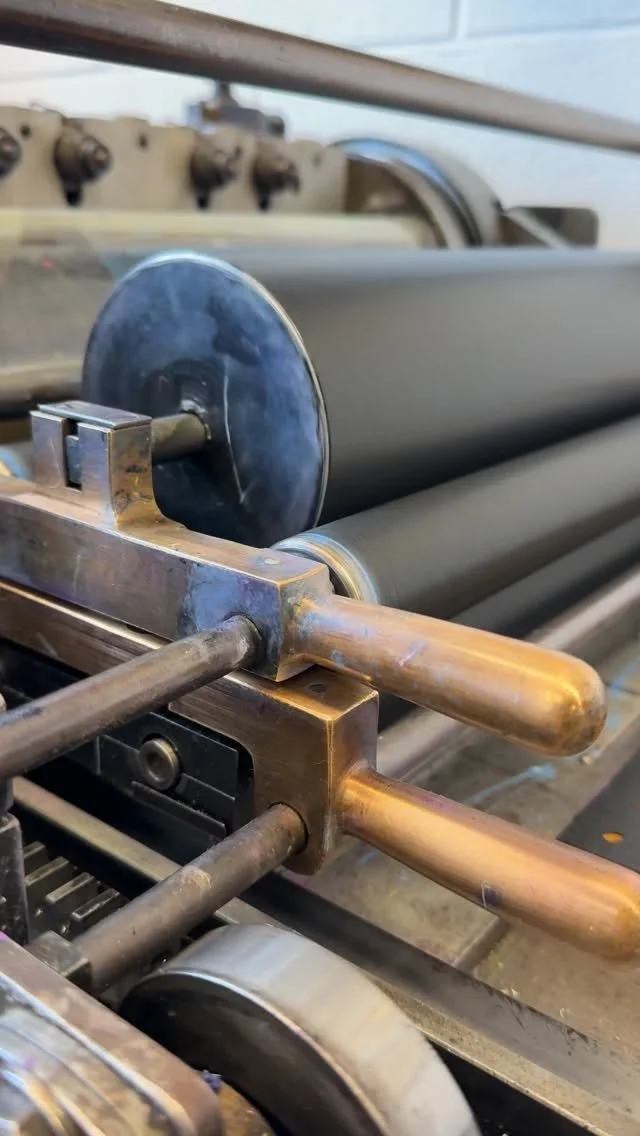
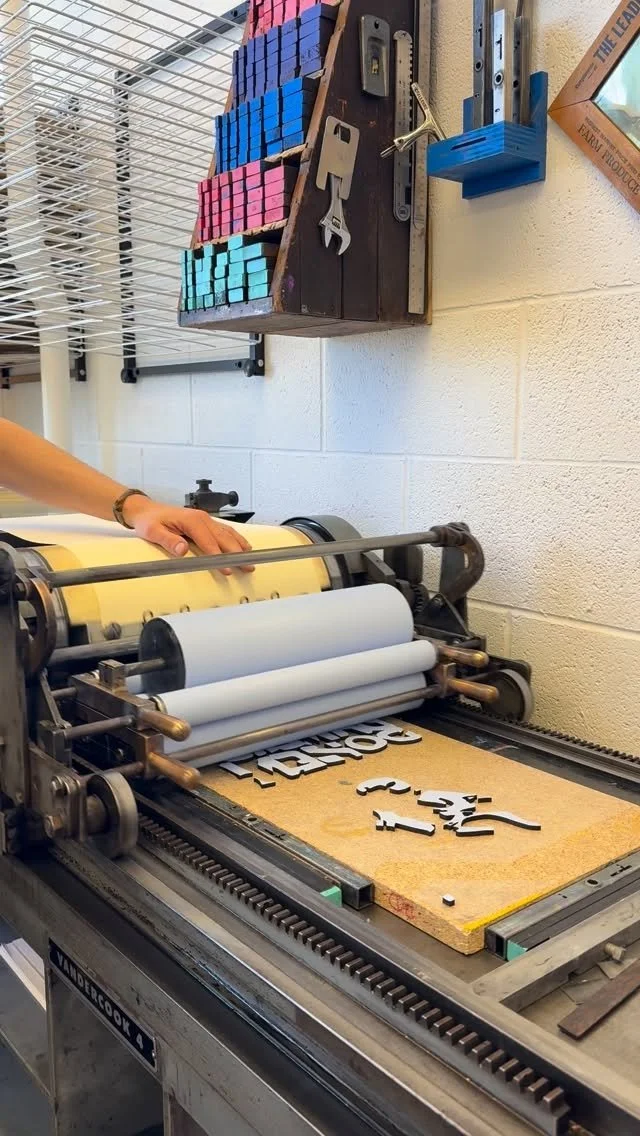
Paper is selected for durability and surface quality. Editions typically range from 50 to 500 prints, with a limited allocation reserved for the website. Each poster is printed on a Vandercook No. 4 proof press.
Pressure is adjusted to achieve a consistent but tactile impression characteristic of relief printing.
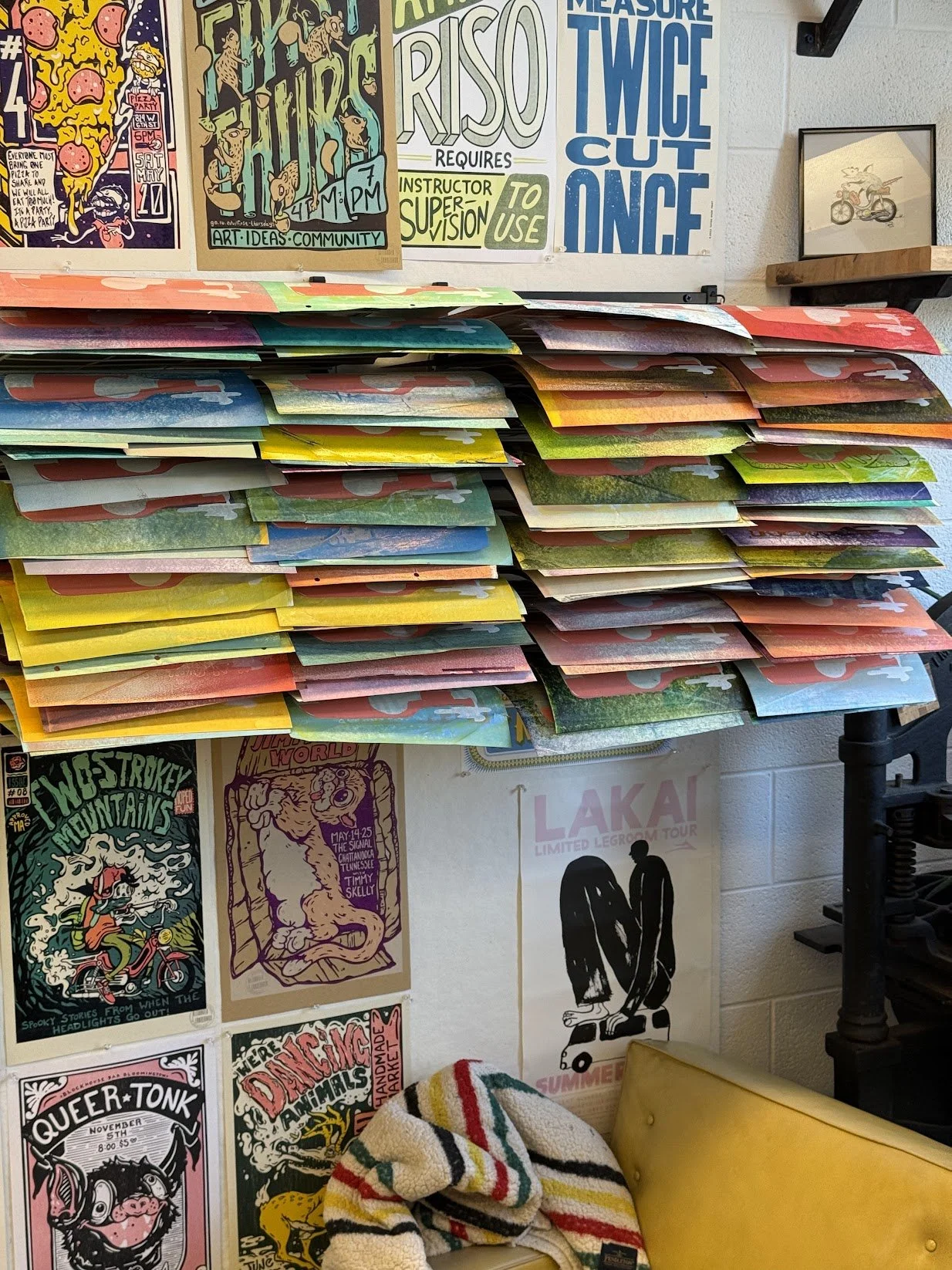
Building the Printing Form
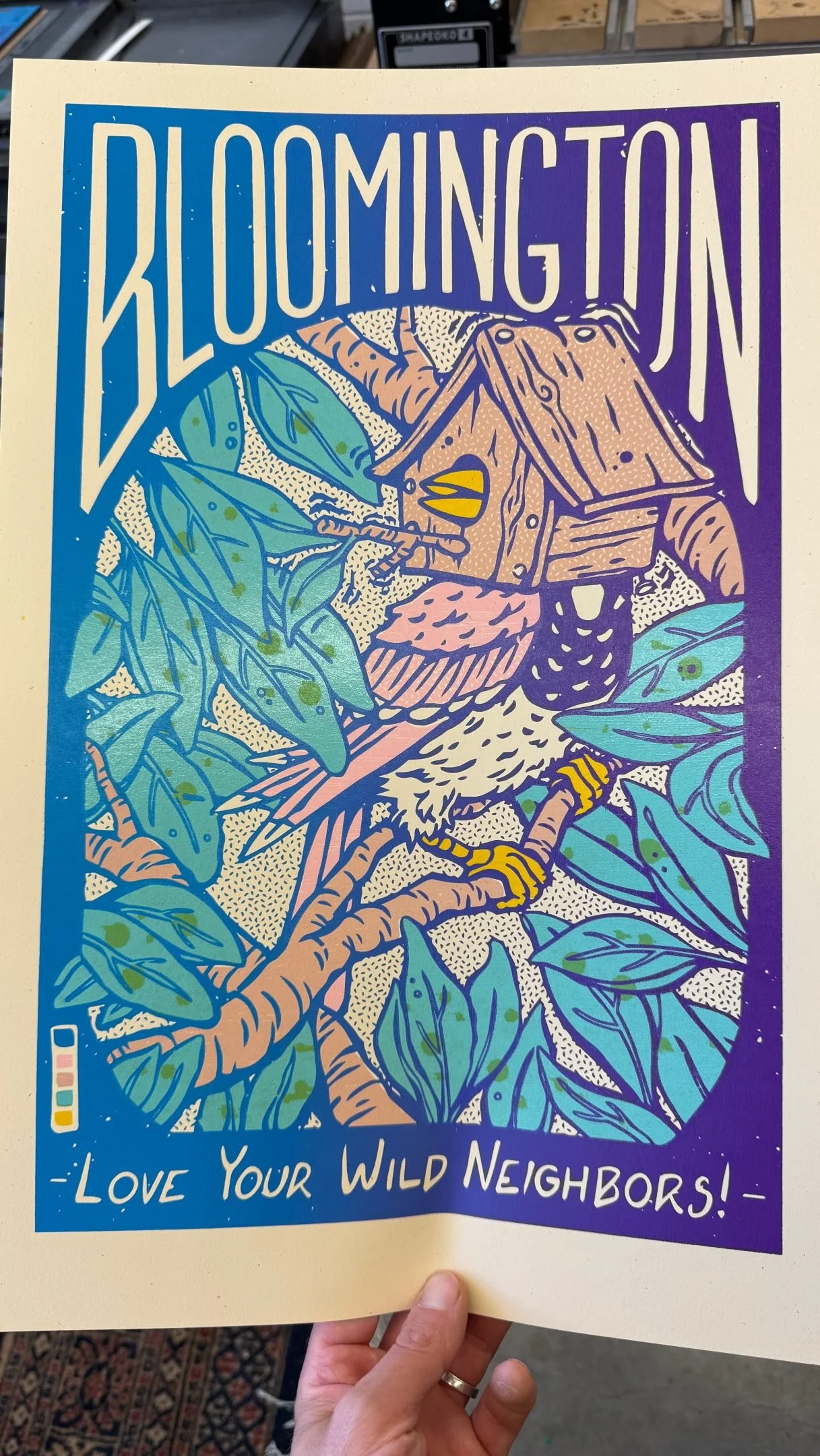
Once the design is resolved, the imagery and typography are translated into relief. In many cases, the entire poster is drawn by hand and cut as a laser-engraved relief block. This allows for custom letterforms and integrated compositions that function as a single printing surface.
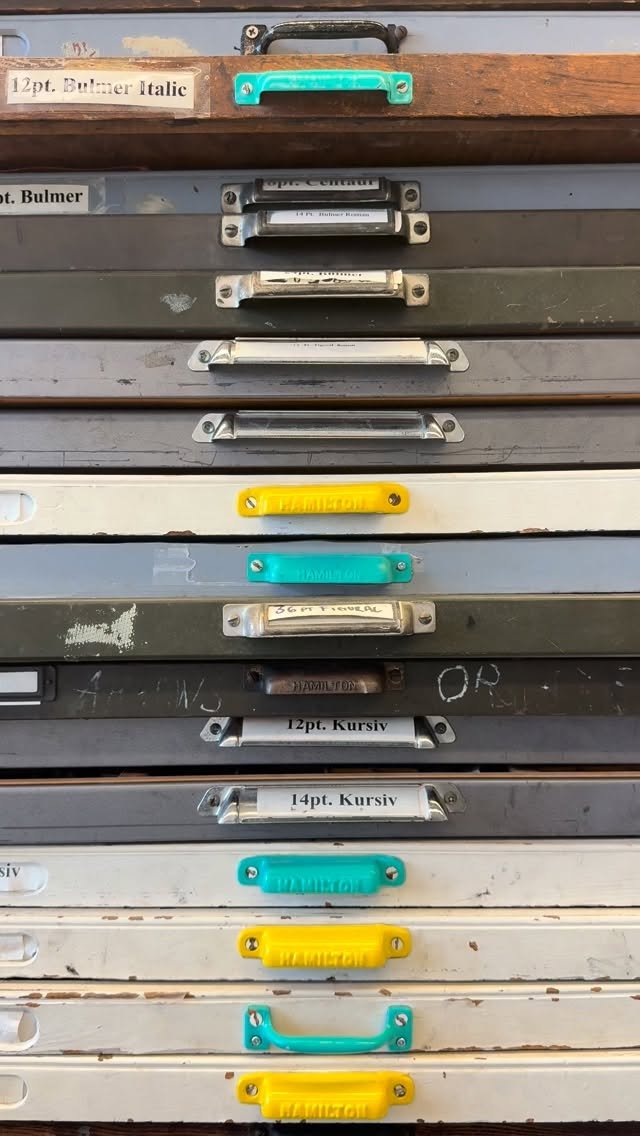
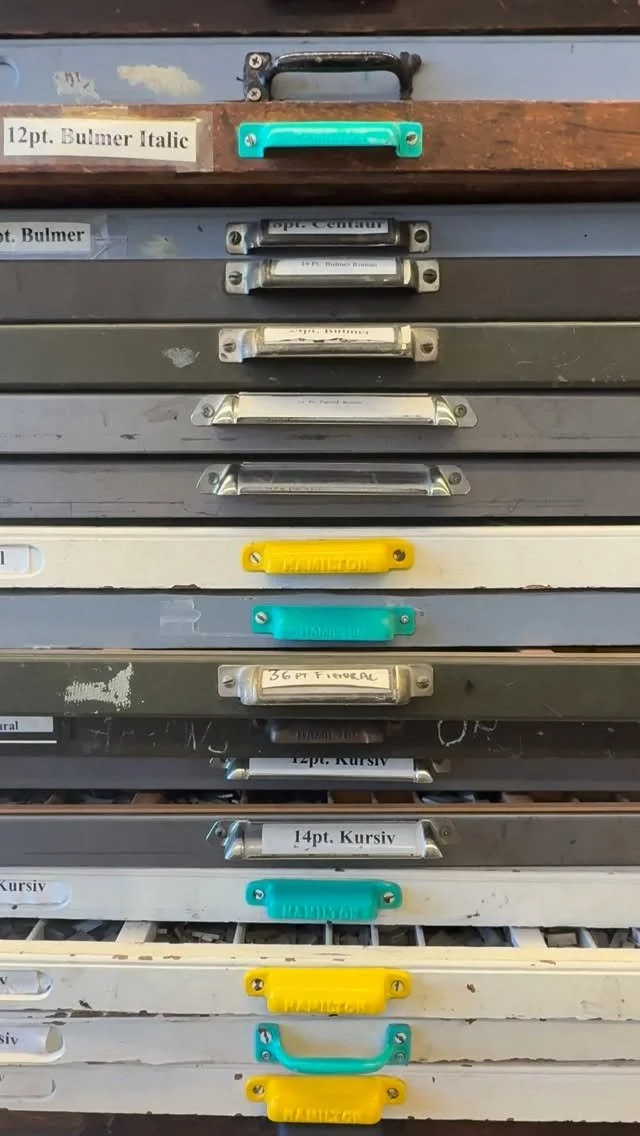
When the design calls for it, wood and metal type are incorporated alongside these blocks. Type is set by hand from cabinets, arranged line by line, and combined with carved linocuts or laser-cut elements.
All components are locked into the press bed using furniture and quoins to create a stable form. Whether composed entirely of laser-cut relief or a combination of type and blocks, the result is a physical structure that will pass through the press multiple times for each color.
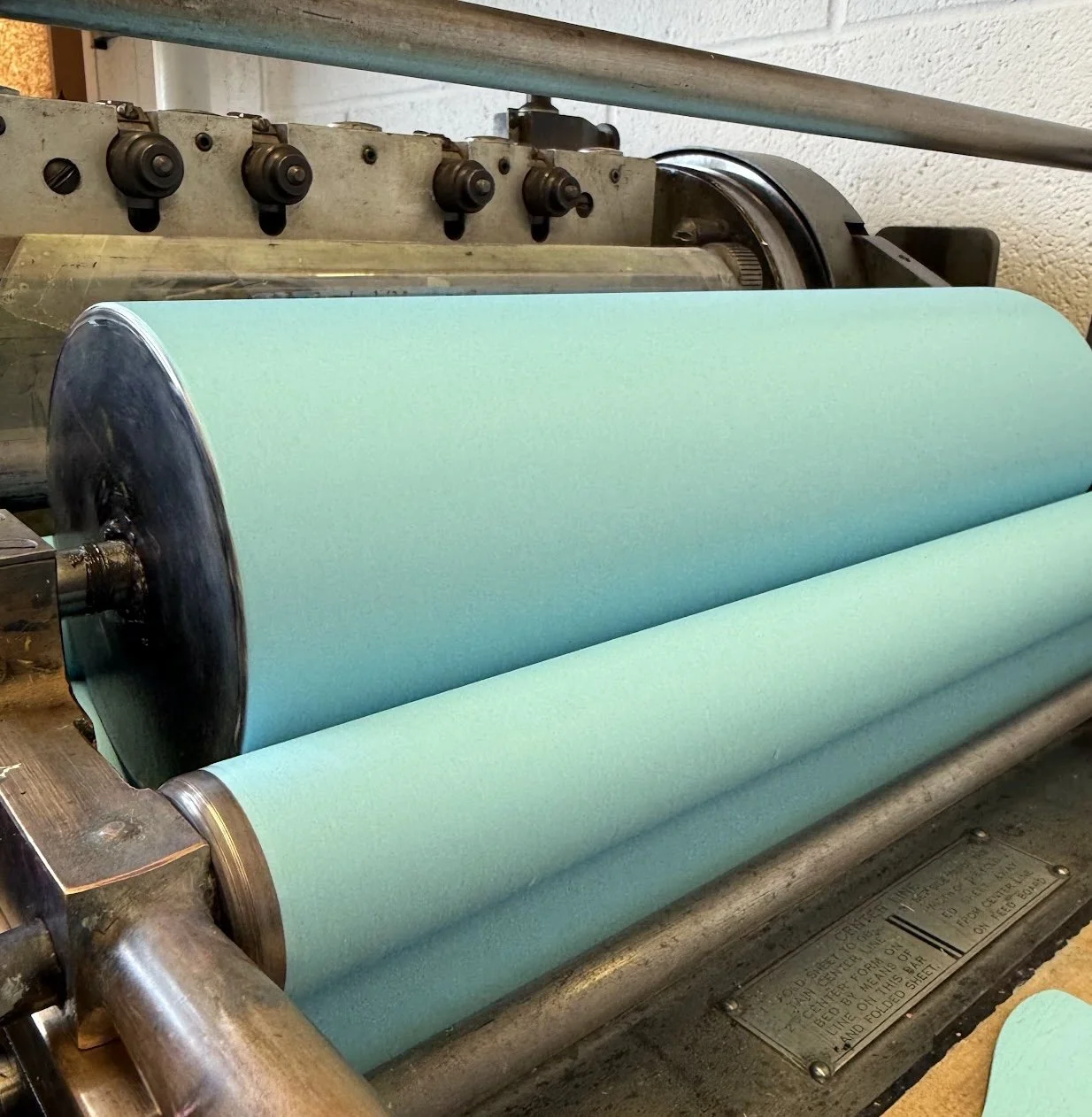
Printing the Edition
Printing an edition requires time and consistency. Sheets are run, stacked, dried, and re-run for additional colors as needed. Registration is carefully maintained to align each layer.
Because each poster is hand-printed, subtle variation occurs across the edition. These differences are inherent to relief printing and distinguish the work from mass-produced reproductions.
Once complete, prints are trimmed, counted, and divided between the band/venue and the limited website allocation.
From Studio to Venue
Finished posters are shipped nationwide to touring bands and venues. A portion of the edition becomes available through my online store. Once the website allocation sells out, posters are rarely reprinted.
Each hand-printed concert poster is produced in small runs using wood type, linocuts, and relief blocks, resulting in a physical artifact tied to a specific performance and location.
Poster Commission FAQ
-
Yes. I regularly work with touring bands, venues, and management teams to design concert posters for specific performances. If you are interested in commissioning a poster for an upcoming show or tour, please reach out through the contact information on the About page.
-
Edition sizes generally range from 50 to 500 prints, depending on the needs of the band or venue. A portion of each edition is often reserved for the artist to sell through the website.
-
Because each poster is designed and printed by hand, production requires a minimum of three weeks. Projects requested on a shorter timeline are considered rush jobs and may depend on the printing schedule.
-
Posters are printed using traditional relief printing methods, including wood type, linocuts, and laser-cut blocks. Each color is printed separately on a Vandercook proof press.
-
Reprints are uncommon. Posters are produced as limited edition concert posters tied to a specific performance. When tours include multiple shows, I generally prefer to create individual poster designs for each date rather than reprint a single design.
-
Yes. Finished posters are shipped directly to the venue, band, or tour manager before the show whenever possible. Prints are carefully packed to ensure they arrive safely and ready for the merchandise table.
-
When prints from an edition remain available, they are released through the Shop section of this website. For most commissions, an agreed-upon number of prints are retained by the artist to be sold through the website or at markets.
Designing Hand-Printed Gig Posters
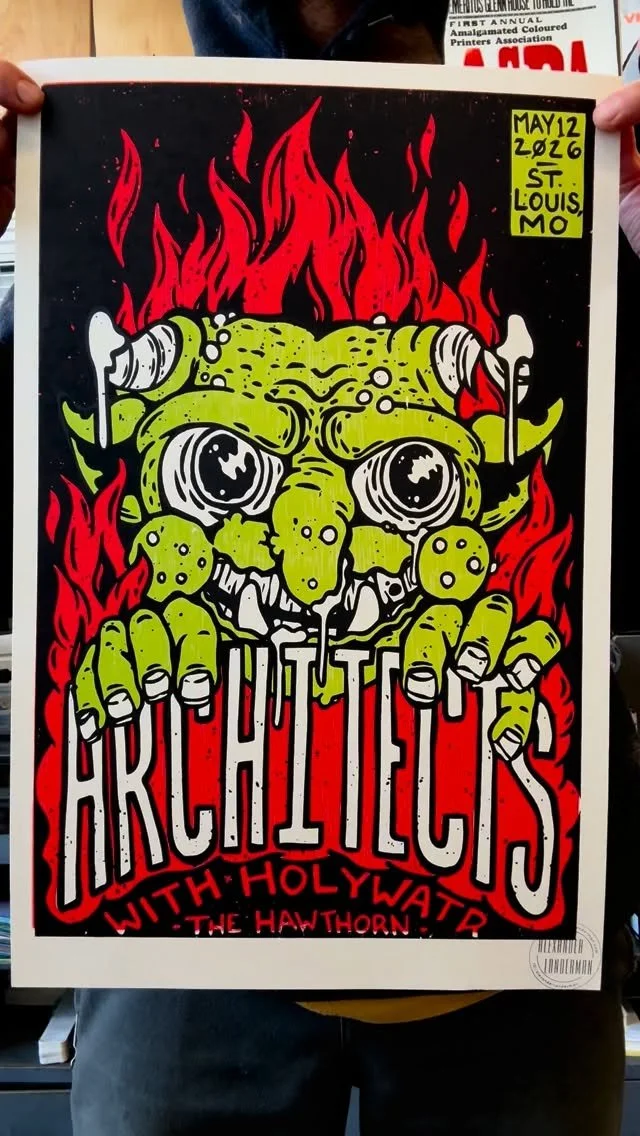
Hand-printed gig posters are design objects first and printed objects second. Before ink touches paper, the poster must communicate clearly, establish tone, and reflect the identity of a specific performance. Relief printing does not limit that design process; it defines it.
Visual Hierarchy and Communication
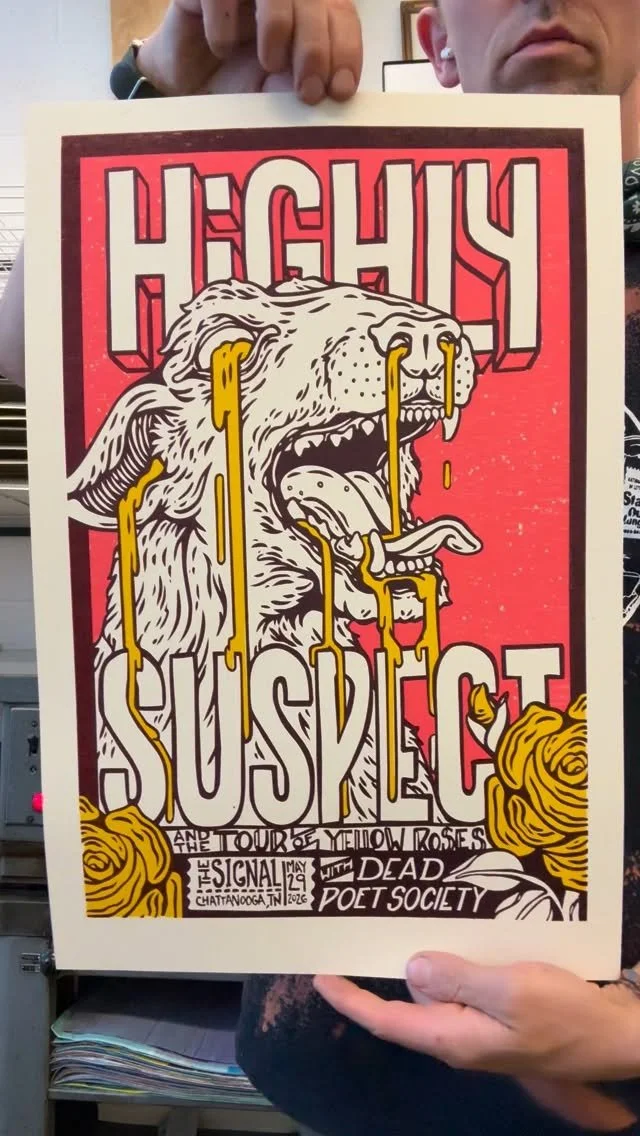
A concert poster has a job to do. The band name, date, venue, and city must be legible at a distance while still allowing space for image, atmosphere, and nuance. Visual hierarchy determines how the eye moves across the page.
Scale is one of the most important tools. A band name may dominate the composition or integrate into the image itself. Secondary information is positioned to support rather than compete. Because the work is printed by hand, typography carries weight — physically and visually — and must be considered in relation to pressure, spacing, and proportion.
The goal is clarity without rigidity, and expression without confusion.
Designing for Touring Bands
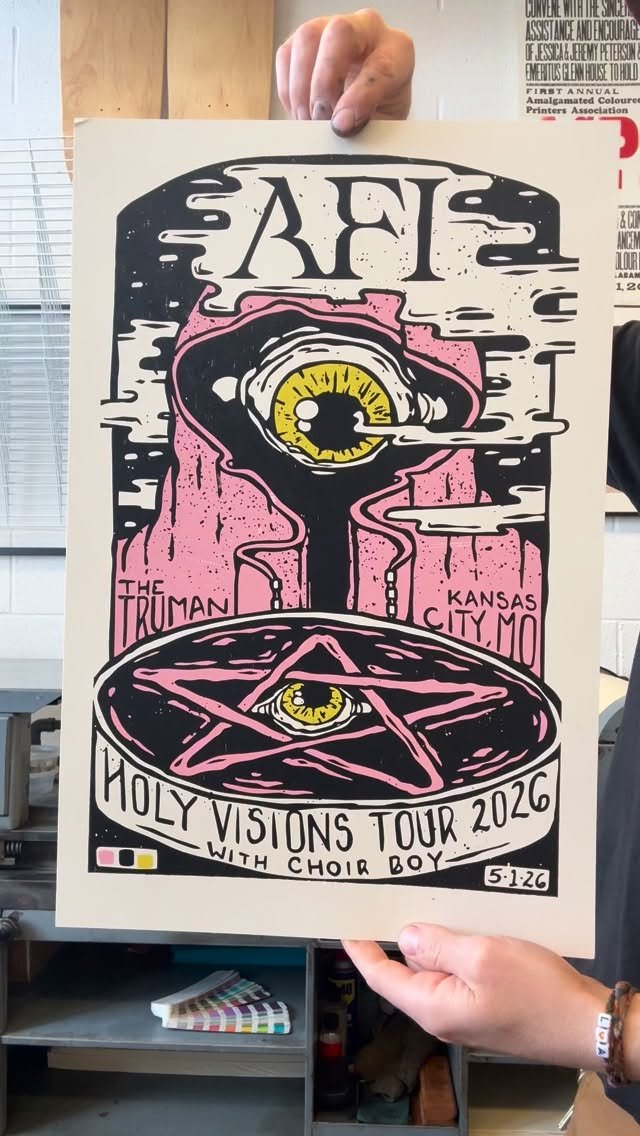
Touring bands require posters that reflect both a specific performance and a broader tour identity. Some compositions emphasize illustration, others lean on typographic structure. Genre, venue size, and audience inform the visual tone.
The design process balances the character of the band with the realities of relief printing. Strong contrast, clear structure, and integrated imagery ensure the poster remains readable while retaining depth and personality.
A well-designed gig poster does more than announce a show. It becomes a record of presence — a physical artifact that continues to circulate long after the performance ends.
Design and Value
Because these posters are printed in small editions, design carries long-term weight. Composition, material, and structure influence not only how a poster reads in the moment, but how it holds up over time.
Hand-printed gig posters occupy a space between design and printmaking. They are meant to be used, collected, and revisited. Design decisions made at the beginning of the process ultimately determine whether a poster remains compelling beyond the date it advertises.
Material as Design Constraint
Relief printing shapes design decisions from the beginning. Wood and metal type have fixed proportions. Linocuts and laser-cut blocks hold detail differently than digital output. These characteristics are not limitations; they influence form.
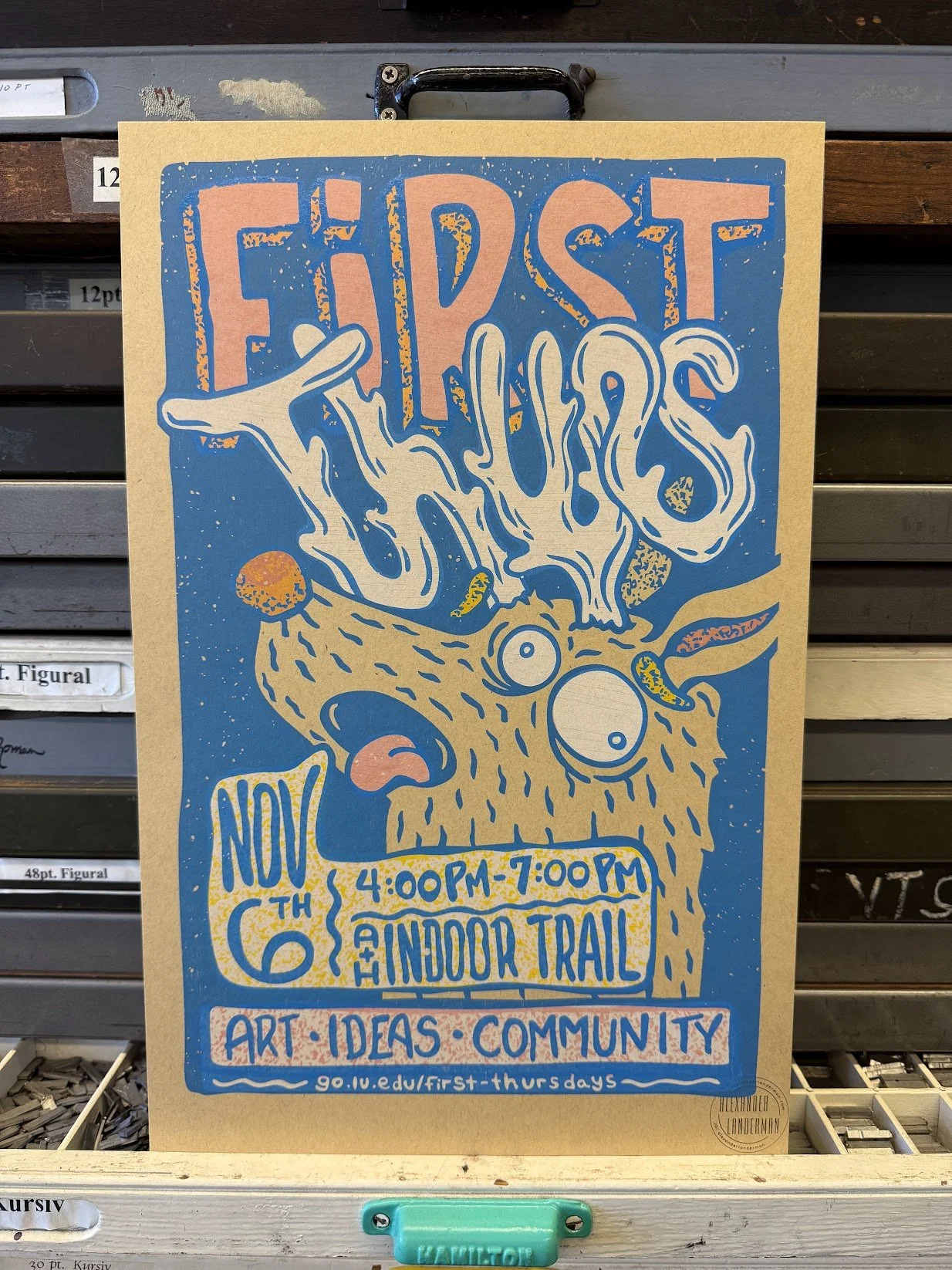
When lettering is drawn by hand and translated into a laser-cut relief block, it becomes both image and type. This allows custom letterforms that respond directly to the tone of a band or performance. The resolution of the material affects line weight, texture, and contrast, and those qualities become part of the design language.
Design is not separated from process. It develops in response to it.
Format and Proportion
Most posters measure 12 × 18.5 inches. That scale is intentional. It allows for strong vertical compositions while remaining practical for venues and collectors.
Working within a consistent format encourages experimentation within structure. Proportion, margins, and negative space are treated as active elements. A poster must function in multiple contexts: on a wall, in a venue window, or framed in a home.
Design choices account for all of those conditions.
Alexander’s Instagram